


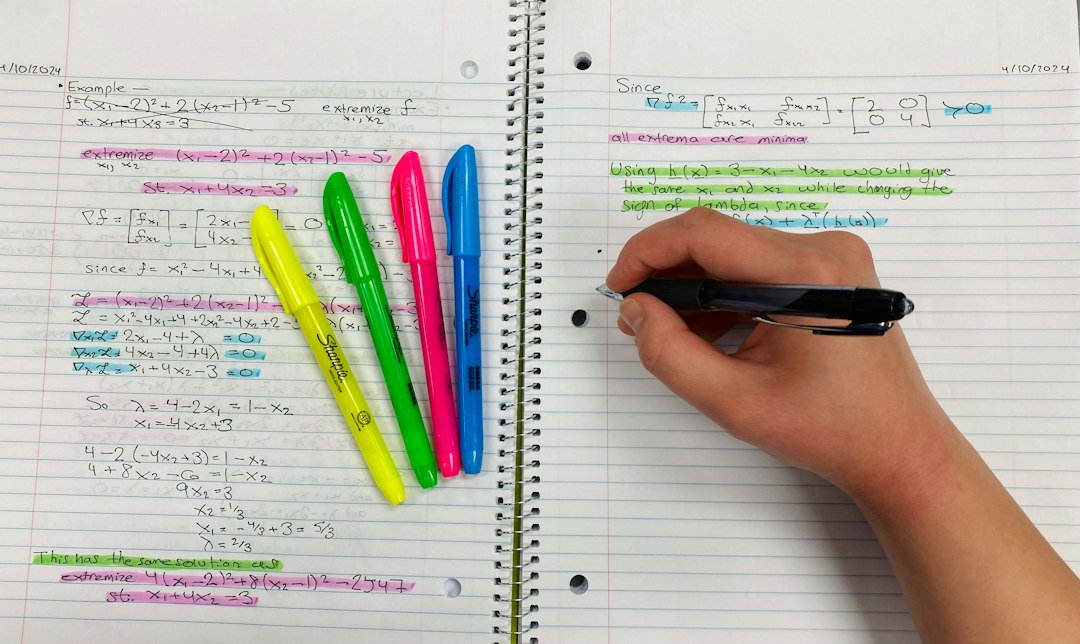
You’re in a lecture, meeting or study session and the speaker moves fast. Your page fills with half-formed sentences, arrows, and a few underlined words—you’ll have trouble finding the key points later. The difference between that messy page and a clear, reviewable one often isn’t talent; it’s the right stationery and a few habits that suit how you work. This guide shows what actually matters when buying stationery for taking clear and organized notes, then recommends practical products and setups for common use cases.
What truly matters when choosing stationery for notes
Focus on readability, structure, durability and ease of review. That means: paper layout that matches how you think, pens that write cleanly without smudging, tools for quick indexing and a carrying or desk setup that keeps things available when you need them. Size, weight and portability matter if you’re mobile; paper quality and binding matter if you keep notes long-term.
Pick a notebook format to match how you take notes
Notebook choice is the biggest single factor in how your notes look and how easy they are to review. Pick by method rather than aesthetics.
- Lined (ruled) notebooks — Best for linear, sentence-style notes and lectures where you predominantly write full sentences. Choose narrow or college-ruled if you write small and want more lines per page.
- Dot-grid notebooks — Versatile for a hybrid of writing, diagrams and quick tables. Dots give subtle guides for margins and alignment without the visual weight of lines.
- Grid (graph) notebooks — Ideal for technical subjects, charts, and precise diagrams. Grids make alignment easy for tables and equations.
- Page-per-subject or indexed notebooks — If you regularly review, notebooks with numbered pages and an index or ones with preprinted sections make retrieval faster.
- Loose-leaf binders or disc notebooks — Best if you reorganize notes often or want to insert handouts. They let you sort by topic and remove or add pages.
Paper weight: 70–90 gsm is a common sweet spot—thicker if you use fountain pens or heavy highlighter use to avoid bleed-through.
Choose pens and markers that keep notes legible
Legibility is about consistent, high-contrast strokes and predictable drying.
- Gel pens (0.5–0.7 mm) — Smooth and dark; good for neat handwriting. Watch for smudging if you’re a left-hander.
- Ballpoint pens — Fast-drying and reliable, good for quick note-taking and poorer paper.
- Fineliners (0.3–0.5 mm) — Crisp thin lines for detailed notes, diagrams and small lettering.
- Highlighters — Use 2–3 colors max. Reserve bright colors for main ideas and pale colors for secondary facts; avoid over-highlighting.
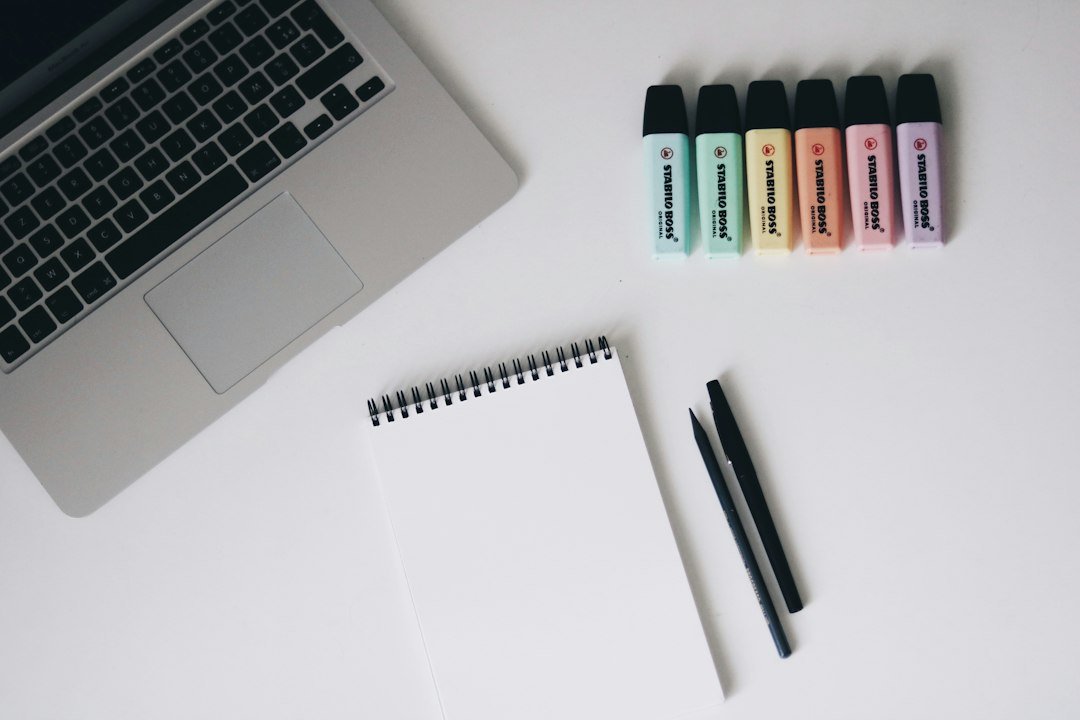
Tip: Test your pen on a corner page to check bleed and feathering before committing to it across notes.
Indexing and quick-recall tools that save review time
Even the clearest notes are useless if you can’t find the section you need quickly. These small tools make a big difference:
- Sticky tabs or page flags — Use colored tabs for broad categories (e.g., red = definitions, blue = examples). Stick them at the page edge for fast flipping.
- Large sticky notes — 4″x6″ pads are excellent for summarizing an entire lecture and tucking into the notebook front or slide-in binder pockets.
- Index pages — Reserve the first two pages of a notebook to record topic titles and page numbers as you go.
Carry and organize: pouches, cases and desk layout
If your tools are scattered you’ll either waste time or take inferior substitutes. Choose storage by how you move:
- For backpacks and classes — A clear pencil pouch keeps essentials visible and visible security checks are easier.
- For desk-based work — A small desktop organizer with compartments for pens, highlighters and tabs keeps items at hand.
- For mixed-use — A compact roll or zip pouch with segmented pockets gives protection and quick retrieval.
Match stationery to common use cases
Here are specific combinations for typical note-taking needs.
Lecture-heavy courses (fast talkers)
- Notebook: College-ruled spiral or indexed notebook for quick page tearing and adding.
- Pen: Fast-drying ballpoint or 0.7 mm gel for speed and clarity.
- Extras: 3×3 sticky notes for quick summaries; colored tabs for topic markers.
Problem sets, diagrams and STEM subjects
- Notebook: Grid or dot-grid for neat equations and accurate diagrams.
- Pen: Fineliner for precision; mechanical pencil for sketches.
- Extras: A few highlighters to mark formulas vs examples; a small ruler.
Meeting notes and action items
- Notebook: 5×8 or A5 notebook—portable but with enough room for bullets.
- Pen: Dark gel or rollerball; reserve a different color for action items.
- Extras: Sticky flags to mark pages with open tasks; a 4×6 sticky to place on your to-do board.
Review-focused study (flashcard-style)
- Notebook: Dot-grid or ruled with a Cornell layout for cues and summaries.
- Pen & markers: Fineliner for neat bullets and two highlighter colors for primary vs secondary facts.
- Extras: Large sticky notes for chapter summaries and a consistent color-coding scheme.
Recommended stationery that fits these needs
Below is a single, well-matched product that commonly solves indexing and quick-summarizing needs described above.
This lined sticky notes set (multiple sizes and colors) pairs especially well with notebooks used for lectures and meetings. Use the larger 4″x6″ sheets for chapter or meeting summaries you can stick to the front of your notebook; use the smaller 3″x3″ pads for inline flags and quick reminders.
How to build a simple note-taking kit under $20
- One ruled or dot-grid notebook sized to your bag (A5 for portability, A4 for detailed review).
- Two reliable pens: one dark gel or roller, one fineliner or mechanical pencil.
- One small pack of highlighters (choose a pale tone set of 2–3 colors).
- Sticky notes / tabs: one pack of mixed-size sticky notes and tabs.
- Clear pencil pouch or small desk tray to keep everything together.
When to invest more (and when to skip it)
Spend more if you keep notes long-term, archive them, or need paper that handles fountain pens and heavy highlighting—better paper and durably bound notebooks are worth it. Skip premium notebooks if you’re frequently discarding pages, or if you prefer digital notes with occasional paper backups.
- Pick a notebook layout (lined, dot, grid) that matches how you write and draw.
- Test your pen on your chosen paper to check bleed and drying time.
- Plan a simple color scheme (2–3 colors) for highlighting and tabs.
- Include at least one larger sticky note for end-of-session summaries.
- Choose a carrying solution that keeps your kit accessible.
Clarity in notes comes from matching stationery to your method: choose the right paper layout first, then pick pens and indexing tools that preserve legibility and speed. A small, consistent kit—good notebook, reliable pen, sticky notes and a pouch—solves most note-taking problems.
Is a dot-grid notebook better than lined for notes?
Dot-grid is more flexible—good if you alternate text with diagrams. Lined is faster for pure text-heavy notes. Choose based on whether you expect to draw tables or formulas.
What pen tip size is best for neat notes?
0.5–0.7 mm balances legibility and speed; finer tips (0.3–0.4 mm) are great for small handwriting and detailed diagrams.
How should I use sticky notes for review?
Use a 4×6 sticky to write a short session summary and stick it to the front of the relevant notebook or binder; use smaller flags to mark pages with important concepts.
Can I mix digital and paper note-taking effectively?
Yes—use paper for initial capture and quick diagrams, then transfer concise summaries or action items to a digital system for searchability and reminders.
How many notebooks should I keep at once?
Keep one current notebook per major area (e.g., one for each course, client, or project) so reviews are focused and you avoid flipping between topics.



