


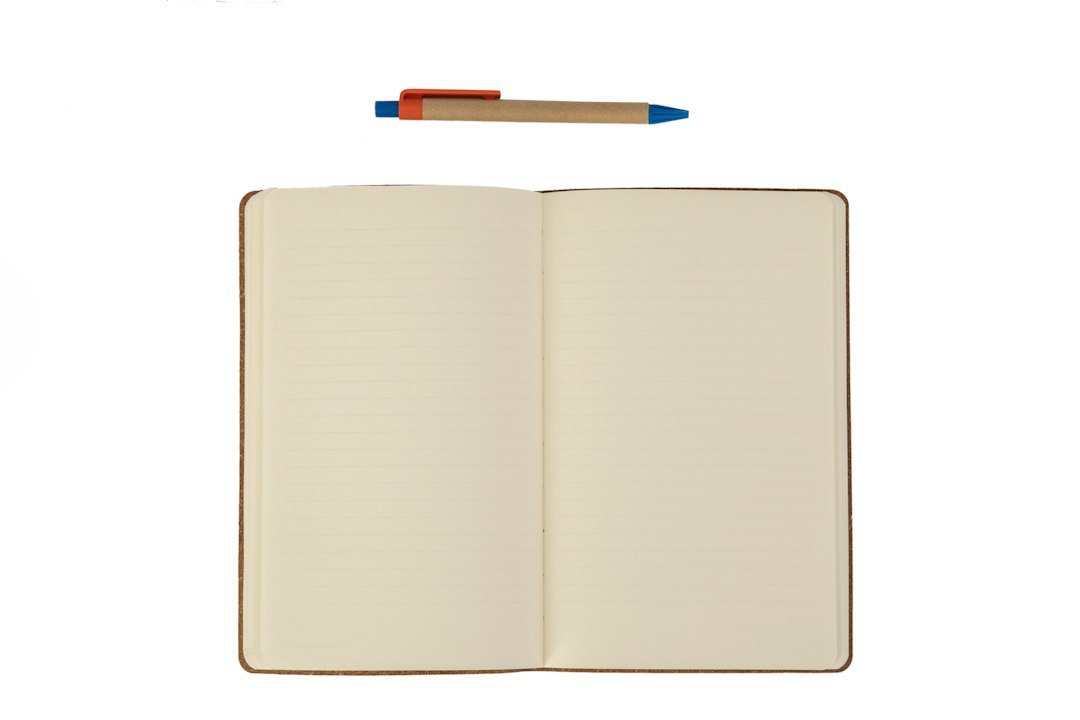
The quick answer: choose A4 if you need standard formatting, filing and maximum writable area; pick Long if you want a narrower, more portable notebook for ledger-style notes or tight bags; and choose King Size when layout room (big headings, diagrams, interleaved pages) and classroom/teacher-friendly spreads matter most. Each size trades portability, page area and how you organise pages—match that trade-off to how and where you write.
How to decide: the four practical criteria that matter
Make the choice by answering four simple questions about how you’ll actually use the notebook:
- How much continuous writing space do I need per page or spread?
- Will the notebook live in a bag, a desk, or on a lectern?
- Do I need standard paper sizes for printing, filing or photocopying?
- Do I prefer single-column long notes, wide-page layouts, or room for diagrams and marginalia?
Keep those in mind while we compare the three sizes against the same practical dimensions.
Quick comparison: page area, portability and layout
Page area and usable writing space
A4 (≈21 × 29.7 cm) is the standard office and school size. It gives the most familiar layout for typed handouts, worksheets and templates, and the largest single-page writable area for continuous prose or large diagrams.
Long notebooks are narrower (often around 18 × 26 cm or longer but slimmer) and are designed for columned entries, lists or ledger-style notes—less horizontal room but a tall page that’s easier to scan vertically.
King Size (about 24 × 18 cm in the Page Work Stationery catalog) often offers a slightly wider format than long but a taller layout than A4 in some fits; the net result is generous space for headings, margin notes and interleaf pages in many exercise notebooks.
Portability and bag fit
A4 is bulkier and fits a laptop bag or briefcase comfortably but may protrude in small satchels. Long notebooks usually slide into slimmer bags and are easier to hold with one hand while writing. King Size sits between: wider than long but often slimmer than A4 in overall footprint, making it a good classroom or desk-first option.
Filing, photocopying and templates
If you’ll be photocopying or scanning pages into A4 templates, an A4 notebook avoids layout mismatches. Long and King Size may need cropping or leave white margins when copied into standard A4 forms.
Writing style, ruling and subject fit
Wider pages (A4, King Size) suit essay-style note-takers, art and mind maps. Narrower long notebooks are ideal for lists, foreign-language practice, maths columns, bookkeeping and sequential notes where vertical flow matters.

Meaningful trade-offs—what you give up when you choose one size
- Choosing A4: You get maximum area and compatibility with printed forms but accept extra weight and lower one-handed portability.
- Choosing Long: You gain portability and vertical scanning ease, but lose horizontal space for diagrams and wide column layouts.
- Choosing King Size: You get a compromise—ample room for headings and diagrams with generally better classroom handling—at the cost of perfect A4 compatibility.
Which size fits each common user profile
Students taking lecture notes or doing homework
Best: A4 or King Size. A4 pairs with handouts and is great for subjects requiring large diagrams (biology, geography) or legible maths workings on full-width pages. King Size works very well for exercise books used in many schools—generous writing area, sturdy format and often available in ruled formats like single, double or maths grid.
Teachers, graders and exam prep
Best: King Size. The extra margin and interleaf options common in king-size exercise notebooks let teachers annotate and keep a clear layout for marking and feedback. (See the store’s King Size category for ready-made ruled options.)
Professionals, planners and meetings
Best: A4 for handouts and formal notes; Long for portable daily checklists. If you frequently pass pages to colleagues or attach printed reports, A4 avoids resizing. For compact meeting notebooks tucked into a laptop sleeve, Long is less intrusive.
Artists, designers and project planners
Best: A4. The wider canvas permits sketches, taped-in samples and full-page layouts. However, some designers prefer King Size when they want slightly different proportions for sketchbooks or presentation copies.
People who prefer one-handed at-the-desk or on-the-go writing
Best: Long. Easier to hold with one hand and write on in crowded or standing situations; ideal for inventory, client visits and quick checklists.
Practical buying checks before you pick a size
- Check your bag dimensions—will the notebook lie flat without folding or sticking out?
- Match the ruling (single, double, four, maths) to the subject: maths grids for calculations, single for prose, double for beginner handwriting practice.
- Decide if you need interleaf (blank pages between ruled pages) for rough work or diagrams—commonly found in king-size exercise notebooks.
- Consider spine and binding: soft bind is lighter; stitched or sewn bind lies flatter for two-page spreads.
- Measure your bag or folder to ensure the notebook fits comfortably.
- Confirm ruling type suits your subject (maths grid, single, double, four).
- Decide if interleaf or extra pages are needed for rough work.
- Prefer scanned/printed templates? Choose A4 for best fit.
- Check binding style if you need flat spreads for diagrams.
If you regularly work with printed forms or need large diagrams, choose A4. If portability and vertical, list-style notes matter, choose Long. If you want a classroom-friendly compromise with room for annotations and interleaf pages, King Size is often the best match.
Are king size notebooks larger than A4?
King Size notebooks used by Page Work Stationery are slightly wider than some long formats but do not match the exact dimensions of A4; they offer more classroom-friendly layout rather than strict A4 compatibility.
Can I photocopy long or king size into A4?
Yes, but expect white borders or scaling; A4 originals copy most cleanly without adjustment.
Which ruling should I pick with each size?
Ruling depends on use: maths grids for calculations, single for essays, double for handwriting practice; size choice affects layout but not ruling function.
Do king size notebooks come with interleaf pages?
Some king size exercise notebooks include interleaf (blank) pages—useful for drawings or rough work—check the product description before buying.
What’s the best size for travelling professionals?
Long notebooks are often best for travel because they slip into slimmer bags and are easy to handle standing up.



